Triceratops Eating Grass Redwork
As an embroidery designer who has spent years refining digitizing techniques for boutique apparel, I approach every new design asset with a critical eye. We are not just looking at pixels; we are visualizing thread tension, fabric distortion, and the final tactile experience of the wearer. Recently, I evaluated a digital embroidery file titled Triceratops Eating Grass Redwork for a potential limited-edition sweatshirt drop. This piece offers a unique blend of rustic charm and playful subject matter that could resonate strongly with specific market segments.
First Impressions and Aesthetic Mood
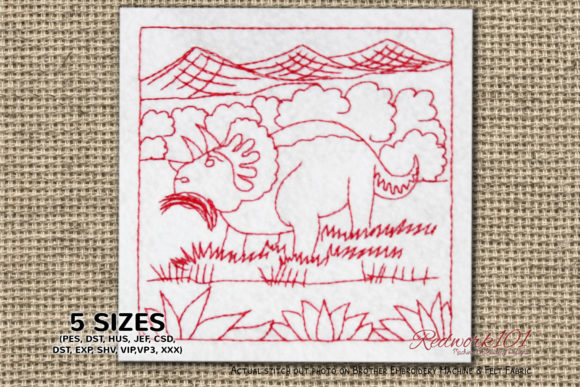
The moment you view the preview of Triceratops Eating Grass Redwork, the mood is immediately established as whimsical yet grounded. The description indicates a Triceratops standing in a forest, consuming green grass, surrounded by flowers on the front side. This composition suggests a narrative-driven design rather than a simple logo placement. For a small clothing brand or Etsy seller, this storytelling element is crucial. It transforms a basic garment into a lifestyle product.
The term "Redwork" typically implies a monochromatic or limited color palette, often reminiscent of traditional American folk art. However, the mention of "green grass" and "flowers" suggests a slight expansion into color work while retaining that classic, hand-stitched aesthetic. If executed well, this design feels both nostalgic and modern. It avoids being overly childish, making it suitable for teens and adults who appreciate quirky, nature-inspired graphics. The layout appears balanced, with the dinosaur as the focal point and the flora providing a decorative frame, which works exceptionally well for chest placements on hoodies or back prints on oversized tees.
Application on Sweatshirt Embroidery
When considering this design for sweatshirt embroidery, the fabric texture plays a significant role. French terry or heavy cotton fleece provides the perfect stability for this kind of detailed work. The contrast between the soft, plush fabric and the structured embroidery will elevate the perceived value of the item. I envision this design on neutral tones like oatmeal, heather grey, or cream to let the "redwork" style shine. Alternatively, placing it on a deep forest green or navy blue sweatshirt would create a sophisticated, moody look that appeals to a more mature demographic.
For a boutique brand, versatility is key. This embroidery file is not limited to just the chest. Because the design includes natural elements like grass and flowers, it can be adapted for sleeve accents or even a small pocket placement. Imagine a mini-version of the Triceratops head embroidered on the cuff of an oversized hoodie. This attention to detail enhances the custom apparel feel, signaling to the customer that this is a premium handmade product.
Color Strategy and Thread Contrast
The prompt mentions that the outer box color is different, which is a vital technical detail. In redwork, the outline defines the shape. Ensuring high contrast between the outline thread and the fill stitches is essential for readability, especially on darker fabrics. If the base fabric is dark, a bright white or silver outline thread might be necessary to make the Triceratops pop. Conversely, on light fabrics, a deep burgundy or black outline would provide that classic, sharp definition. The choice of thread colors will dictate whether the final piece looks vintage or contemporary.
Technical Evaluation for Commercial Use
From a production standpoint, several factors must be considered before committing this digital embroidery file to commercial production. First, stitch density is paramount. Since the design features a dinosaur eating grass, there may be areas of dense fill stitching around the body and lighter running stitches for the foliage. High-density areas on sweatshirts can cause pilling or distortion if not stabilized correctly. I recommend using a cut-away stabilizer for all sweatshirt applications to ensure longevity through multiple wash cycles.
Another concern is the hoop size and placement. The design needs to fit comfortably within standard hoop dimensions without requiring excessive re-hooping, which can misalign the pattern. If the design is too large for a standard 5x7 hoop, it may require a larger hooping frame, which increases production time. Additionally, the "optional Box Stitch" mentioned in the description should be tested for its impact on overall stiffness. Too much box stitching can make the fabric rigid, reducing the comfort of the garment. For a cozy seasonal apparel line, minimizing unnecessary stiffening is a priority.
- Washing Durability: Ensure the underlay stitches are sufficient to prevent the Triceratops from shifting during laundering.
- Small-Size Readability: Test the design at reduced scales to ensure facial features and flower details remain distinct.
- Fabric Texture: The looped texture of sweatshirt material can hide fine details, so simplifying intricate floral elements might be wise.
Brand Identity and Market Positioning
In the crowded marketplace of online shops, visual recognition is everything. Triceratops Eating Grass Redwork offers a distinctive character that stands out against generic clipart-style designs. By incorporating this into your boutique brand identity, you signal a commitment to unique, curated aesthetics. It appeals to customers who value individuality and humor in their wardrobe.
This design is particularly effective for Etsy sellers and small shop products targeting the "cottagecore" or "quirky nature lover" demographics. The combination of prehistoric creatures and pastoral settings creates a juxtaposition that is highly shareable on social media. When creating a printable mockup for your listings, focus on lifestyle photography that shows the garment in a natural setting—perhaps paired with denim and boots—to reinforce the rustic, outdoor vibe of the design assets.
Enhancing Customer Engagement
A well-executed embroidery project builds buyer trust. Customers can see the quality of the finished product through high-resolution images that highlight the texture of the threads. When shoppers see that the grass stitches have directionality and the flowers have delicate petals, they perceive higher value. This perception allows for better pricing strategies and reduces return rates associated with poor quality expectations. Furthermore, offering customization options, such as changing the thread colors to match a specific brand palette, can further engage customers and foster loyalty.
Final Verdict for Designers
Overall, Triceratops Eating Grass Redwork presents a strong opportunity for commercial embroidery projects aimed at creative entrepreneurs. Its blend of narrative, style, and adaptability makes it a versatile asset for any hoodie design collection. However, success depends on technical execution. Pay close attention to the stabilizer choice, thread tension, and color contrast to ensure the design maintains its integrity on thick fabrics.
Before adding this to your library, verify the exact stitch count and file format compatibility with your machinery. Also, confirm the licensing terms to ensure you have the right to sell physical goods made from this embroidery file. If these technical boxes are checked, this design has the potential to become a standout piece in your next seasonal drop, appealing to those who appreciate the charm of handmade details with a touch of prehistoric fun.