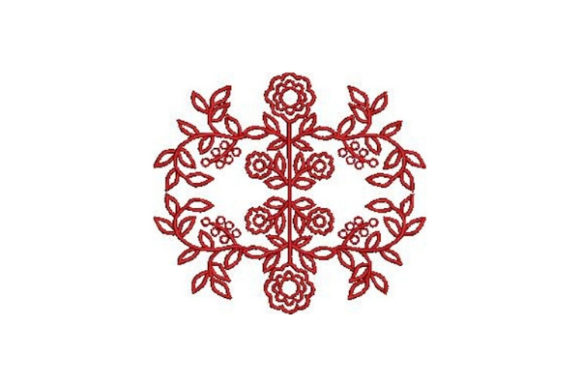
Two Red Flowers with Green Leaves Review
As a designer who spends half my day digitizing files and the other half testing how they stitch out on everything from heavy canvas to delicate baby muslin, I have developed a healthy skepticism toward "simple" designs. Often, simplicity in embroidery translates to a lack of detail that fails to hold its shape or looks flat once stitched. However, when I pulled up Two Red Flowers with Green Leaves, I saw immediate potential for practical application. This is not just another generic floral clipart; it is a functional machine embroidery design that understands the constraints of the hoop and the physics of thread.
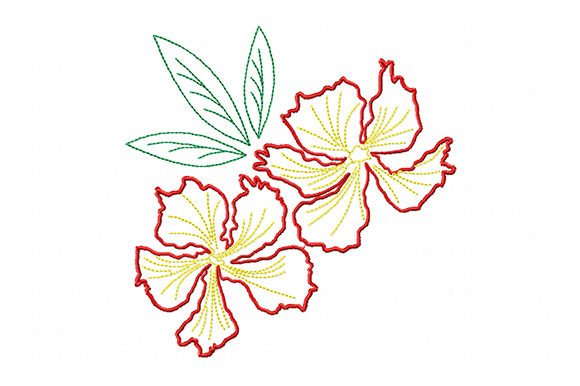
The core appeal of this piece lies in its color story and structural balance. The combination of red, green, and yellow described in the product details suggests a vibrant, classic palette that reads well even at smaller scales. For an Outline Flowers category entry, it manages to feel substantial without being overwhelming. It feels like a design meant to sit quietly but confidently in a corner, rather than dominating an entire garment. That restraint is exactly what makes it valuable for small business owners and Etsy sellers looking to create cohesive brand assets.
Real-World Application: The Tote Bag Test
To truly evaluate an embroidery file, you have to imagine it on a finished product. My first mental mockup was a natural cotton tote bag for a boutique coffee shop or a handmade soap brand. Placing Two Red Flowers with Green Leaves in the bottom right corner creates a sophisticated anchor point. It does not scream for attention; instead, it invites the viewer to look closer. The visual personality here is cheerful yet grounded. If this were placed on a sweatshirt, it would likely work best as a left-chest logo or a centered back graphic where the contrast between the bright threads and the fabric texture can shine.
I also envision this design thriving on personalized gifts. Imagine a set of kitchen towels for a housewarming gift. The red flowers pop beautifully against white or cream linen, while the green leaves provide a necessary cooling element that prevents the design from feeling too hot or aggressive. On a baby item, such as a muslin blanket or a hooded towel, the soft outline style ensures the design remains gentle and appropriate, avoiding the harshness that dense fill stitches can sometimes introduce. The key here is versatility. A good embroidery project should adapt to the mood of the recipient, and this design strikes a balance between playful and elegant.
Performance on Various Fabrics and Garments
When evaluating any digital embroidery file, the substrate is just as important as the stitch path. Two Red Flowers with Green Leaves appears to rely on a mix of satin and running stitches to define the petals and stems. This means it will perform exceptionally well on stable fabrics like denim, twill, and tightly woven cottons. For custom apparel like caps or hats, the curved surface requires careful hooping, but the relatively open layout of this design reduces the risk of distortion compared to a solid block of fill stitch.
However, there are specific scenarios where caution is required. If you are planning to use this on a textured fabric, such as a chunky knit sweater or a bouclé upholstery material, the fine details of the flower outlines may get lost. The thread needs a smooth surface to lay flat and reflect light properly. Similarly, if you are working with thin or stretchy knits, the tension of the stitch density could cause puckering if a proper stabilizer is not used. Always test on scrap fabric first. I cannot stress this enough: seeing how the threads interact with the weave of your specific fabric is the only way to guarantee a professional-looking finished product.
Stitch Density and Thread Contrast
The success of this design hinges on thread selection. Since the description highlights red, green, and yellow, the contrast between these colors is vital. Yellow can be notoriously difficult to stitch clearly because it is often a lighter value and can show gaps in coverage. Ensure your digitizer has used adequate underlay stitches to stabilize the yellow areas. When choosing your thread colors, consider the background. On dark fabric, the red and green will stand out dramatically, but you may need a white or light-colored backing stabilizer visible through the stitches to make the colors pop. On light fabric, the vibrancy will be more muted, requiring higher saturation threads to maintain visual impact.
Strategic Use Cases for Small Businesses
For the Etsy seller or craft business owner, Two Red Flowers with Green Leaves offers excellent utility for creating design assets that feel handmade but look consistent. It is perfect for creating a series of matching items—a pillow cover paired with a tea towel, or a set of embroidered patches for jackets. The simplicity of the motif allows it to function as a recognizable brand mark without being overly complex.
Consider the holiday market. While red and green might immediately suggest Christmas, the inclusion of yellow and the specific arrangement of the flowers keeps it versatile enough for spring or summer themes as well. You can re-theme this by changing the thread colors entirely. Swap the red for pink and the green for mint for Easter, or keep the red and green but add gold accents for winter holidays. This flexibility increases the ROI of purchasing the file, as one design can serve multiple marketing campaigns throughout the year.
Practical Designer Notes for Execution
Before committing this design to a final sale item, there are several technical checks every embroiderer should run:
- Test Stitch Density: Zoom in on the digital preview. Are the satin stitches wide enough to cover the fabric? If the lines are too thin, they may break down over time, especially on items that require frequent washing.
- Hoop Size Verification: Confirm the dimensions of the design fit comfortably within your intended hoop size. Leaving a margin around the edge prevents the needle from hitting the hoop and ensures the fabric remains taut.
- Black and White Mockup: Convert the design to grayscale to check for value contrast. If the red, green, and yellow blend together into a muddy gray, the design lacks sufficient contrast for clear stitching.
- Stabilizer Selection: Match your stabilizer to the fabric weight. A cut-away stabilizer is usually best for garments that will be worn and washed repeatedly, while tear-away may suffice for decorative pillows or one-time use items.
- Licensing Check: Always review the license terms. Determine if you are allowed to sell finished products made with this file. Some designers restrict commercial use, while others allow unlimited production. Clear licensing protects your small shop product from legal issues.
Final Verdict
Two Red Flowers with Green Leaves is a reliable, aesthetically pleasing addition to any embroidery library. It avoids the pitfalls of overly complex digitization while still offering enough visual interest to engage customers. It is ideal for those seeking a clean, professional look for personalized gifts, apparel decorators looking for quick turnaround logos, and creative entrepreneurs building a cohesive brand identity. By paying attention to fabric choice, thread quality, and proper stabilization, you can transform this simple outline design into a high-quality handmade product that stands out in a crowded marketplace. It is a smart, practical choice for anyone serious about their craft.