Flowers Hedge Border Review
If you have ever stood behind a craft fair booth, sweating through your shirt while trying to explain why your handmade apron costs $35, you know that visual impact is everything. Customers decide in seconds whether an item is worth picking up. As an embroidery designer who has spent years turning digital files into tangible, sellable goods, I look at every new design asset with one question: Will this move product?
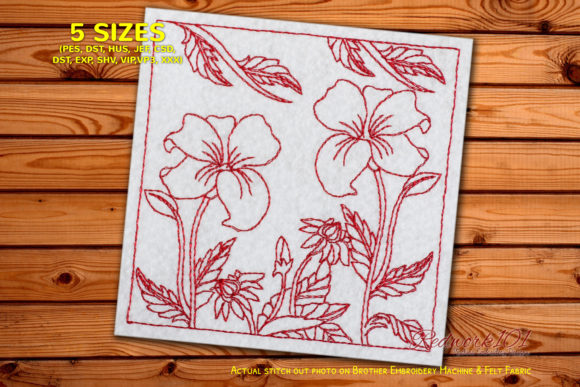
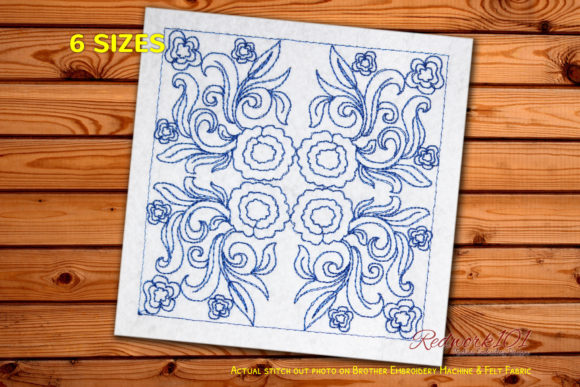
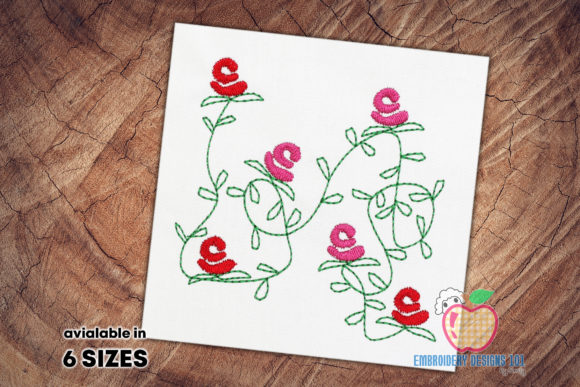
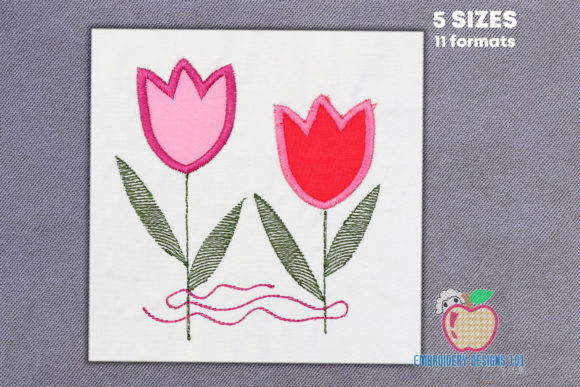
Recently, I reviewed the Flowers Hedge Border, a machine embroidery design categorized under Single Flowers. At first glance, it promises a decorative, organic feel that could easily fit into the current trend of farmhouse chic or modern botanical aesthetics. But does it work for real-world production? Can it handle the rigors of batch manufacturing for a weekend market? Here is my professional breakdown of how this design performs on the table and in the hoop.
First Impressions and Visual Appeal
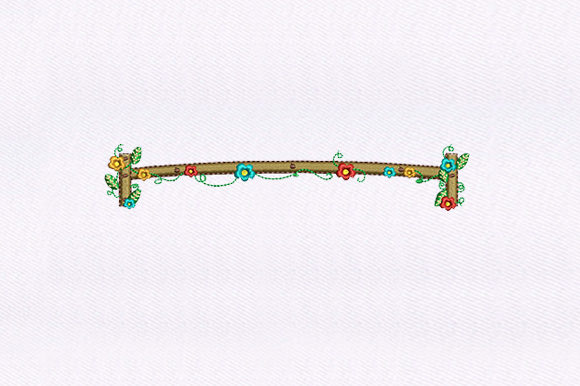
The title "Flowers Hedge Border" suggests a linear, repeating motif rather than a singular, centered bloom. This is crucial for craft fair sellers because borders offer versatility. Unlike a large central medallion that requires precise centering on every single tote bag or pillow cover, a border design can be forgiving. It allows for slight variations in placement without looking "wrong," which speeds up production time significantly.
Visually, the design likely strikes a balance between cute and elegant. In the world of handmade products, overly complex designs can look cluttered when stitched, while overly simple ones might lack perceived value. A floral hedge border tends to read as premium and thoughtful. It feels intentional. When a customer sees a tea towel embroidered with a continuous line of delicate flowers, they perceive higher craftsmanship than they would with a generic stamped print. This design has the potential to elevate basic blank items—like plain canvas totes or neutral linen aprons—into giftable, boutique-quality pieces.
Product Applications and Market Fit
To determine if Flowers Hedge Border is a viable craft fair product, we need to look at where it shines. Based on its nature as a border design, here is how I see it performing across different handmade product categories:
- Tote Bags and Market Bags: This is perhaps the strongest application. A floral border running along the bottom hem or the top edge of a sturdy canvas tote adds a touch of femininity without overwhelming the utilitarian nature of the bag. It photographs beautifully for Etsy listings because the contrast between the natural fabric and the colorful thread pops on screen.
- Kitchen Towels and Aprons: For the home cook, a subtle floral border on a tea towel or the bib of an apron is incredibly appealing. It fits the "farmhouse kitchen" aesthetic perfectly. However, you must consider the fabric texture. Terry cloth towels can sometimes distort fine stitch details, so this design works best on smooth cotton or linen blends.
- Patches and Patches: If the border segment is isolated, it makes for a excellent iron-on or sew-on patch. These are high-margin, low-material-cost items that customers often buy impulsively at booths. You can attach them to denim jackets, backpacks, or caps.
- Hats and Caps: Embroidering a curved surface is tricky. A border design might wrap around the crown of a cap, but you need to ensure the hoop size and stabilizer choice allow for enough flexibility. If the design is too wide, it may pucker on the structured front panel of a baseball cap.
- Pillow Covers: Borders frame pillows nicely. A floral hedge running along the edges of a square throw pillow creates a finished, professional look that justifies a higher price point in a boutique setting.
Production Practicality and Efficiency
For the digital seller or the small shop owner, efficiency is money. The Flowers Hedge Border offers several advantages in production. Because it is a border, it can often be digitized to repeat seamlessly. This means you can set up your embroidery machine once and produce multiple identical sections, or use the same file for a series of matching items (like a set of four napkins).
Furthermore, the design is versatile enough to serve as both a small accent and a larger focal element depending on the scale. On a small pouch, it might wrap entirely around the perimeter. On a large duvet cover or a full-length apron, it might run along just the bottom third. This adaptability increases the utility of the embroidery file.
When creating printable mockups for your online store, remember that borders look great in flat-lay photography. They guide the eye across the image, making the product look more dynamic. This is a key factor in increasing click-through rates for Etsy sellers and social media ads.
Technical Considerations and Careful Use Notes
As an experienced designer, I cannot stress enough that not all machine embroidery designs are created equal. Before you commit to buying or using this file for commercial production, you must address several technical realities:
- Stitch Density and Clarity: Floral designs often contain many tiny petals and leaves. If the stitch density is too high, the fabric will become stiff and unmanageable, especially on lightweight tees or thin cottons. Conversely, if the stitches are too sparse, the backing material will show through, ruining the clean look required for a finished product. Always check the file specifications for density ratings.
- Thread Contrast: The beauty of a floral border relies on color. Ensure you have a good range of thread colors available. Pastel flowers on white fabric might disappear; bright blooms on dark fabric require a dense underlay to prevent the base fabric from showing through. Test your color combinations before mass producing.
- Fabric Texture and Stability: As mentioned, textured fabrics like terry cloth or heavy denim can obscure detail. For the best results, use a stable woven fabric. Additionally, always use the correct stabilizer. A tear-away stabilizer might leave residue on delicate fabrics, while a cut-away stabilizer provides the permanent support needed for stretchy materials like jersey knits used in baby items or fitted apparel.
- Small Details and Lettering: While this design is floral, any accompanying text or very small flower centers can lose clarity if scaled down too much. Never assume a design scales well. If you plan to embroider this on a small item like a tea towel embroidery sample or a mini-pouch, test the smallest intended size first.
Final Verdict for Craft Fair Sellers
The Flowers Hedge Border appears to be a strong contender for the discerning embroidery business owner. It hits the sweet spot of being decorative yet practical. It is not so complex that it takes hours to stitch, nor is it so simple that it lacks character.
For those preparing for a busy weekend market, this design offers a reliable way to create cohesive collections. Imagine a booth featuring matching sets: a tote bag with the border on the bottom, paired with a tea towel featuring the same border on the side. This brand consistency builds trust and encourages buyers to purchase multiples.
However, success lies in the execution. Do not skip the testing phase. Stitch the design on scrap fabric that mimics your final product. Check the hoop size limitations. Verify that the embroidery file formats (such as PES, DST, JEF, etc.) are compatible with your machines. And most importantly, confirm your commercial licensing terms. Just because you bought the file does not automatically grant you the right to sell the resulting physical goods. Read the license agreement carefully to protect your creative entrepreneur business.
If you handle these technical details with care, the Flowers Hedge Border has the potential to become a staple in your inventory, driving sales through its timeless, elegant appeal.